Blog
The cost of missed calls for a business
24 Aug 2026 · 5 min read
What is the cost of a missed call for a business?
It is easy to dismiss a missed call. You were busy, the phone rang twice, and then it stopped. There is no invoice attached, no reminder, and no consequence you can see.
But the caller had decided to contact you at that moment. If they do not leave a voicemail, they may call the next business on the list. The job does not disappear from the market. It goes to a competitor, and you may never know it was available.
That is why the cost is easy to miss. The lost job does not appear in your books. It appears in someone else's.
Where missed call leads and enquiries leak
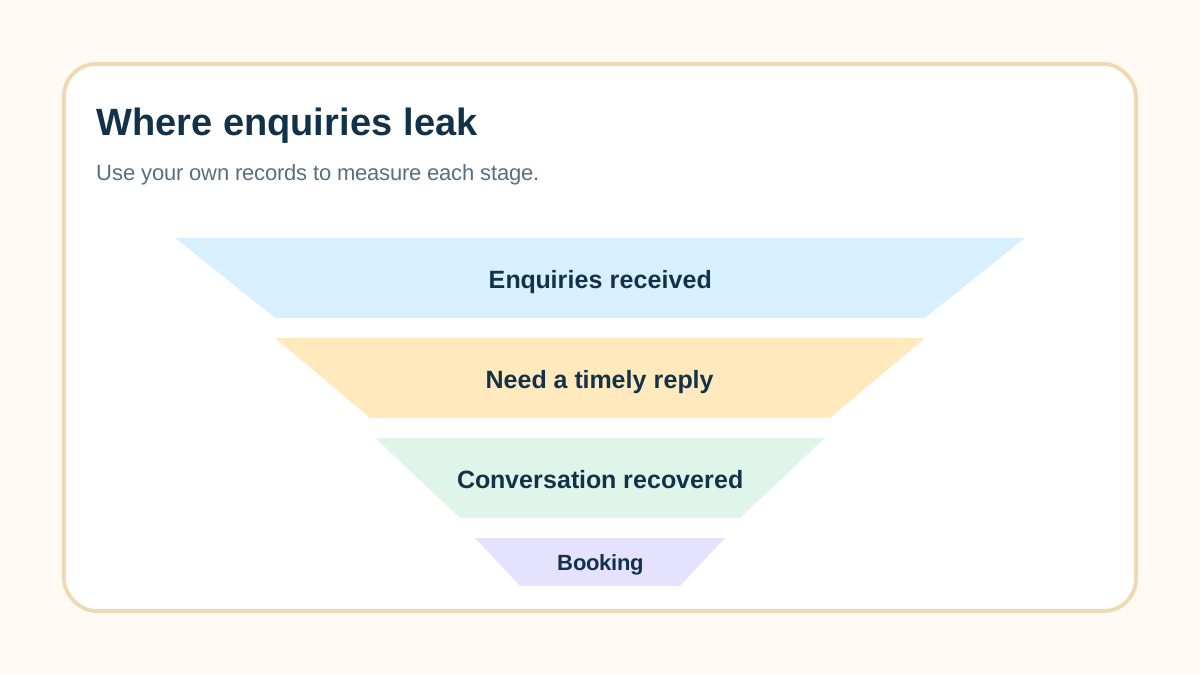
Missed calls are the most obvious leak, but they are not the only one. Service businesses also lose enquiries in two quieter ways:
- Missed contact. Calls ring out, forms arrive during a busy afternoon, or messages sit unseen for hours.
- Slow replies. The enquiry gets answered after the customer has already booked with someone faster. The late reply arrives after the opportunity has moved on.
- Abandoned follow-up. The conversation starts, then goes quiet. Nobody follows up, and the customer's intent fades from "sometime" to "never".
The first leak is dramatic and easy to understand. The other two happen to enquiries you actually received, which makes them easier to overlook. See how response speed affects that first conversation in this guide to first response time.
How to calculate lost revenue from missed calls
Use this simple estimate:
Estimated missed opportunity = enquiries that need recovery × realistic recovery-to-booking rate × average job value
Illustrative example, not a benchmark: Say a business receives 100 enquiries a month, 20 need a reply or follow-up, and 10% of those eventually become jobs. That is 2 jobs. At ₹2,500 per job, the estimate is ₹5,000 a month, or ₹60,000 a year.
The result changes with the actual enquiry mix, job value, and recovery rate. It does not prove that every unreplied enquiry was winnable, separate missed calls from low-quality enquiries, or predict future revenue. Use it as a starting point, then run your own numbers with the lead calculator.
What to measure after a missed call
Track these numbers separately:
- Total enquiries received.
- Enquiries without a timely reply.
- Recovered conversations.
- Recovered conversations that became bookings.
- Average value of those bookings.
A clear response target for every channel, including missed calls, makes the exceptions easier to find. The missed-lead recovery playbook covers what to do after you find them.
How to recover missed call leads
Recovery starts in the minutes after contact and depends on a few consistent habits:
- Respond to everything promptly. Include missed calls. A fast call-back or message can bring the customer back while they are still deciding.
- Follow up until you get an answer. Keep the messages polite, spaced, and patient. Some "dead" leads were simply left without a next message.
- Keep old lists active. Last season's enquiries may still be worth reopening when the customer's timing changes. Old lead reactivation explains how to do that carefully.
Doing this manually every day, while also doing the actual work, is where businesses stall. That is the job Bluee was built for: instant responses, automatic follow-up, and recovery of enquiries that would otherwise be lost.
The worked example shows why even a modest recovery rate matters. Start with the enquiries already coming in, then measure what gets answered and followed up.
Frequently asked questions
How do I calculate the cost of missed calls?
Multiply the number of enquiries that need recovery by a realistic recovery-to-booking rate and the average value of the resulting jobs. Treat the result as an estimate, not guaranteed lost revenue.
Are all missed calls lost customers?
No. Some callers may try again, choose another channel, or have been looking for a different service. Measurement helps you separate missed contact from enquiries that were actually recovered.
How quickly should I follow up on a missed call?
Follow up as soon as your team can send a useful, respectful response. The customer may still be deciding, but the right timing depends on the service and the context of the call.