Blog
First response time for leads: why the fastest reply gets heard
2 Sept 2026 · 6 min read
Why first response time for leads matters
When an AC stops cooling or a pipe starts leaking, customers rarely contact one business and wait. They open their phone and message two, three, sometimes four businesses at once. They choose from whoever appears on Google, the ad they remember, or the business their neighbour mentioned.
The first business to send something useful, such as a question about the area, a realistic arrival time, or a clear next step, becomes the front-runner. Sometimes the booking happens before the second or third reply is even read.
That does not necessarily mean the first business was better. The customer's problem is urgent, and their attention moves quickly. A fast response gives you a chance to continue the conversation. It does not guarantee a booking.
How quickly should a business respond to a lead?
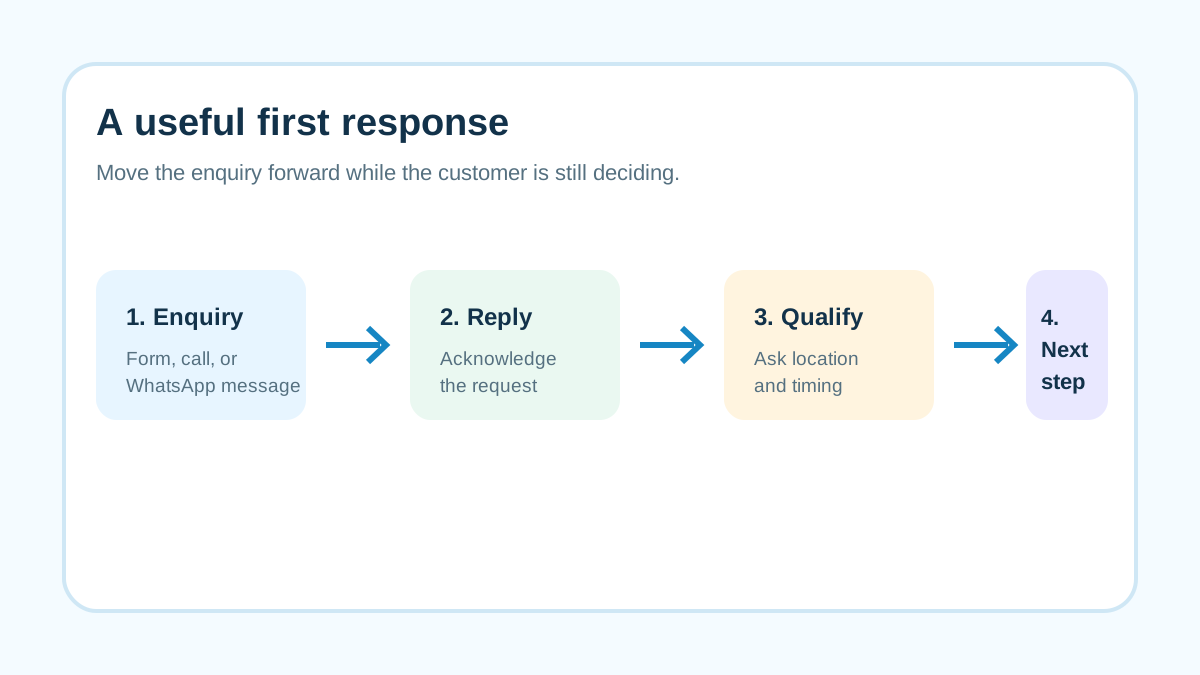
For most local services, "fast enough" means minutes rather than hours. A useful first reply can acknowledge the enquiry, ask one or two qualifying questions, and explain what happens next. It does not need to be a complete quote.
If your reply arrives after the customer has already spoken to two other businesses, you are trying to catch up after the decision has started. The first few minutes after an enquiry are when the customer is most engaged and most willing to answer questions.
That window does not stay open. An enquiry at 7 PM answered the next morning may reach someone who has already booked or stopped looking. You can compare your own response process with this faster lead response guide.
Why good service businesses still reply slowly
Owners do not usually respond slowly because they do not care. Owner-operated businesses are busy in ways that make quick replies difficult:
- You're on a job. The plumber is under a sink. The AC technician is on a roof. The phone rings while both hands are occupied.
- Enquiries scatter. WhatsApp, phone calls, the website form, and Instagram messages each need separate watching, and each can be missed.
- Evenings and weekends are peak. Emergencies do not respect office hours. The enquiries that arrive when you are least able to answer are often the most valuable ones.
The answer is not to work faster at every task. It is to make sure a useful first response can go out while you are busy. Missed calls and slow replies also belong in a broader missed-lead recovery playbook.
What to send in the first lead response
A short message is enough to start:
Thanks for getting in touch. Which area are you in, and when would you like the work done?
The wording will vary by trade, but the job is the same: acknowledge the enquiry and make the next reply easy. Prepare templates for common job types so the message is ready when you are on a job.
How to measure first response time
Measure the time between the enquiry arriving and the first useful reply going out:
- Record the enquiry timestamp.
- Record the first human or automated response timestamp.
- Review the median and the slowest cases separately.
Averages can hide enquiries that wait overnight or through a weekend. Review those exceptions as well as the average, then decide which channels need coverage. Bluee's instant lead response helps cover the first minutes while your team is working.
How faster lead response increases booked work
Fast replies help the same ads, Google listing, and word of mouth produce more booked work because fewer enquiries disappear before anyone responds. Many businesses do not need more leads first. They need to stop losing the ones they already paid to generate.
If you want to see how this would work in your business, book a demo. It takes about twenty minutes.
Frequently asked questions
What is a good first response time for a lead?
Use a response target your team can actually maintain, then measure the exceptions. For many local service enquiries, minutes are more useful than hours, especially when the customer is comparing several businesses.
What should a first reply to a customer enquiry include?
Acknowledge the request, ask the next qualifying question, and explain the next step. A first reply does not need to contain a complete quote.
Does replying first guarantee that a business wins the job?
No. Response speed gives the business a chance to continue the conversation. The final decision also depends on fit, availability, price, trust, and the quality of the service.