Guide
The missed-lead recovery playbook
28 Aug 2026 · 8 min read
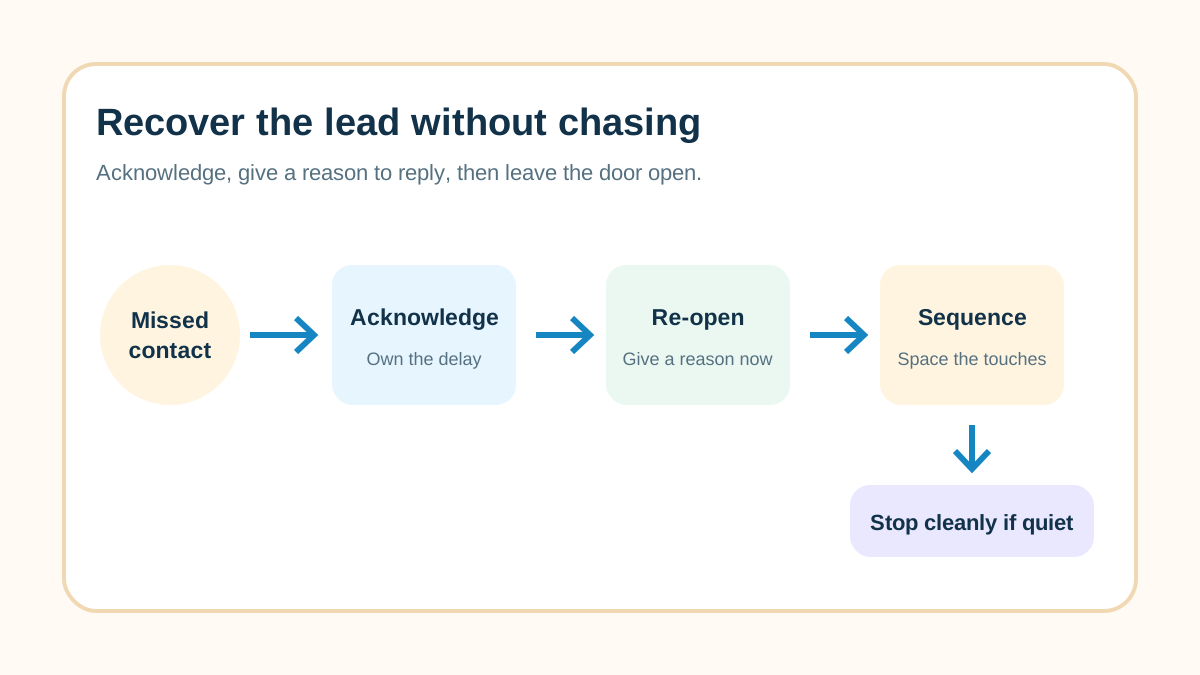
Every service business leaks enquiries. Calls that rang out during a job, forms read hours later, conversations that started and stalled. None of it feels urgent — nothing beeps when a lead goes cold. But the leak is constant, and it's recoverable.
This playbook turns recovery from an occasional guilt-driven "let me message that guy from March" into a system with four parts: acknowledge, re-open, sequence, stop.
1. Acknowledge fast — even late beats never
Recovery starts the moment you realise contact was missed. The rules:
- Missed calls get a call-back or message within minutes, not at end of day. A customer with a leaking geyser calls the next plumber in ten; a fast call-back catches them before the list does.
- Old unread enquiries get acknowledged the day you find them — with an apology, not an excuse. "Sorry I missed this — are you still looking for help with X?" converts remarkably well precisely because it's honest.
- Acknowledge, don't interrogate. The first message re-opens the door; questions come after the customer steps through.
2. Re-open with something for them
The re-open message decides whether the customer replies or archives. The difference between a reply and silence is whether the message is about them:
- Make it current. A seasonal hook, a slot opening, a maintenance due date, a price update — a reason the timing matters now.
- Make it light. One short paragraph, one easy question. "Should I hold a slot for Saturday?" beats a three-paragraph apology.
- Make it specific. Reference what they actually asked for. Generic blasts read as spam and get treated as spam.
Bad: "Just following up on your enquiry." (Follow-ups that only serve the sender get ignored.)
Good: "Hi Kumar — you'd asked about AC service in March. We have technician slots open this week in your area — want me to hold one?"
3. Sequence follow-ups over days, not hours
One unanswered message isn't a closed door — it's a busy person. The sequence that works:
- Day 0: the re-open message (above).
- Day 2–3: one short reminder, adding something new — a slot, a note, an answer to a common question.
- Day 7–10: a final message that leaves the door open. "No rush — if the timing's wrong, just message when it's better."
Three touches, spaced across days. Anything more aggressive starts costing reputation; anything less leaves recoverable leads on the table. Note the rhythm: days, not hours. Following up four times in one afternoon reads as desperation; following up three times across ten days reads as professionalism.
4. Know when to stop
Every sequence ends. No reply after the final message means the customer isn't interested now — and chasing harder converts badly and burns the brand. Stop cleanly:
- Mark the lead "cooled" with a date, not "dead". Next season, they're reactivatable again with a fresh reason.
- Never guilt-trip ("Since you didn't reply..."). The tone of every message should assume the customer is simply busy — because they are.
- Keep the list clean. A list of everyone who ever enquired, tagged by status and date, is a compounding asset. A chaotic jumble is neither archive nor pipeline.
Where this fits day to day
Recovery has three recurring sources, and each needs its own habit:
- Missed calls — call back within minutes; if you can't guarantee that, automate the call-back.
- Unreplied enquiries (forms, messages) — a daily sweep at a fixed time until nothing goes a day unread.
- Stalled conversations — a tagged list and a scheduled re-open rhythm (weekly works for most trades).
The pattern across all three: the recovery work is simple, but it's daily, and it's endless. That's exactly what makes it fail manually. Bluee's missed lead recovery runs this playbook automatically — instant call-backs, re-open messages with a reason, polite sequencing, clean stops.
And if you want to know what the leak is costing you before fixing it, run your numbers — a minute with the calculator tells you whether this playbook is worth an hour of your attention. (It usually is.)