Blog
Old lead reactivation: how to re-engage past enquiries
12 Aug 2026 · 6 min read
Why old leads are still worth reactivating
If your business has run ads, had a website, or answered enquiry calls for more than a year or two, open your WhatsApp business chats, form inbox, and call log. Count the enquiries that never became customers.
For many service businesses, the list can reach hundreds or more. Each entry belongs to a real person who once had a problem and chose to contact you. They are not automatically dead leads. Their timing, budget, or circumstances may have changed.
You have already spent time or money generating those enquiries. Reopening the right conversations gives you another chance to turn that work into booked jobs, provided the contact is relevant and appropriate to revisit.
Why old leads can convert
An old enquiry is a warmer starting point than a cold contact, but it still needs a useful reason to reply:
- They already chose you once. Out of everyone they could have messaged, they messaged you. That gives you context a cold contact does not have.
- Circumstances change. The customer who went quiet because it was "not right now" may have meant that week. ACs break, pipes leak, seasons change, and budgets free up.
- Many never bought at all. Some old enquiries did not choose a competitor. They simply drifted, and the follow-up stopped. The job may still be unclaimed.
Which old leads should you contact first?
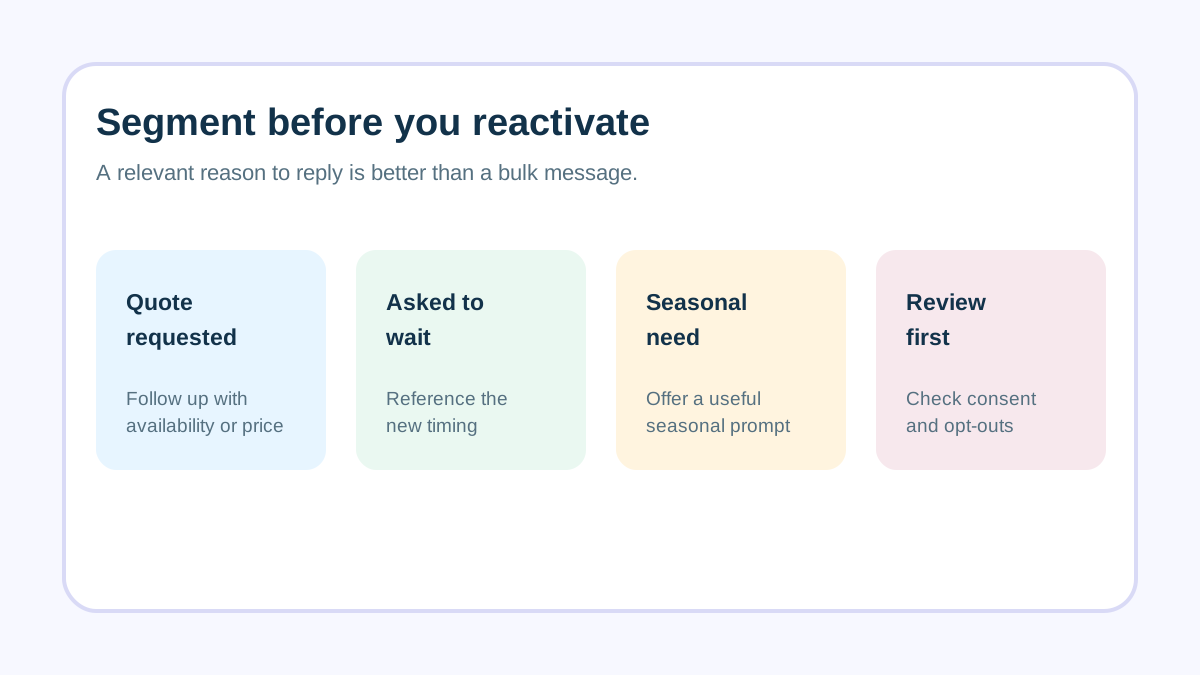
Start with contacts that have a clear history and a relevant reason to hear from you:
- Someone who requested a quote but did not book.
- Someone who asked to be contacted later.
- Someone who went quiet after receiving availability.
- Someone with a seasonal or maintenance-related need.
- Someone whose source, consent status, or context is unclear. Review this group before outreach rather than bulk-messaging it.
Before you reactivate a list, check how each contact was collected, whether the customer opted out, and which messaging rules apply to your channel and location. Remove people who asked not to be contacted. An old spreadsheet is not blanket permission for unlimited outreach.
How to reactivate old leads without being pushy
Reactivation works best when the message gives the customer a useful reason to reply:
- Segment by why they went quiet. Price-shoppers, no-shows, "next season" plans, and one-reply-and-gone conversations need different reopeners.
- Reopen with something useful. A new slot, a seasonal reminder, a maintenance check due, or an updated price gives them a reason to care now. "Just checking in" is not a reason.
- Make it one tap to continue. Ask one easy question, such as "Should I hold a slot for next week?", instead of asking them to restate the whole requirement.
- Sequence over days, not hours. Send a couple of spaced messages, then stop. The goal is to make replying easy, not to crowd the customer.
- Know when to stop. No reply after a short sequence means no for now. Leave the door open and keep the list clean for next season.
Old lead reactivation messages that give people a reason to reply
Use the customer's original context and keep each message easy to answer:
- First message: "Hi [name]. You asked about [service] earlier. We have [specific reason] available this week. Are you still looking for help?"
- Second message: "Just following up on [service]. If the timing has changed, no problem. Would a later date be more useful?"
- Final message: "I'll close this for now so we do not keep bothering you. If you still need [service], reply whenever the timing is right."
Track replies, qualified conversations, bookings, opt-outs, and complaints separately. A larger reply count is not automatically a better result. For a broader recovery sequence, see the missed-lead recovery playbook.
How to build a repeatable lead reactivation sequence
The difficult part is not writing one reactivation message. It is doing the work across old contacts, in segments, with follow-up, every month, while running the business.
That is the job Bluee's old lead reactivation handles: it helps you segment the list, reopen conversations with a reason, and follow up politely so old enquiries do not remain untouched. Faster replies also protect new opportunities, as this first-response guide explains.
If you want to see what that would look like with your list, book a demo and bring your oldest spreadsheet.
Frequently asked questions
Can old leads still be contacted?
Sometimes. Check how the contact was collected, any opt-out or consent record, and the rules for the channel and location before sending a message. Remove anyone who asked not to be contacted.
How long should I wait before reactivating a lead?
There is no universal interval. Use the customer's original timing, the service cycle, and the reason the conversation stopped to choose a relevant moment.
How many times should I follow up with an old lead?
Use a short sequence spaced across days, then stop if there is no reply. Make the final message clear and leave the customer an easy way to return later.